
In the heart of Dubai, a marvel of modern engineering pierces the sky—the Burj Khalifa. As the tallest structure in the world, it represents not only architectural achievement but also human ambition at its finest. With a staggering height of 828 meters (2,717 feet) and 163 floors, the Burj Khalifa has transformed Dubai’s skyline and drawn millions of visitors from around the globe.
From its groundbreaking design to its luxurious experiences, the Burj Khalifa continues to inspire wonder. In this blog, we’ll take you through its story, features, and the unforgettable experiences it offers.
The Vision Behind the Sky-Piercing Tower
To begin with, the Burj Khalifa wasn’t just designed to break records—it was created to put Dubai on the world map as a hub of innovation and prosperity. Launched in 2004 and officially opened in January 2010, the project was led by Emaar Properties and designed by Skidmore, Owings & Merrill, the same architects behind Chicago’s Willis Tower.
From the start, the project aimed high—literally and metaphorically. It set out to redefine what was possible in architectural design. As a result, the Burj Khalifa became a beacon of modern urban development in the Middle East and beyond.
Design Inspired by Tradition
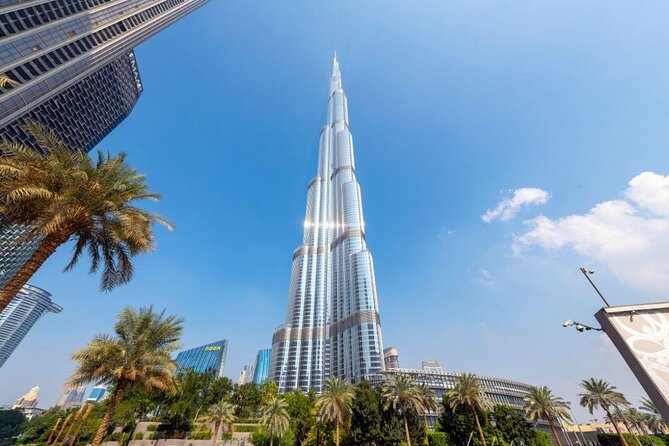
Interestingly, while the tower boasts futuristic aesthetics, its design draws inspiration from Islamic architecture. The spiraling Y-shaped structure mimics the Hymenocallis flower, a desert bloom. Each wing of the building reduces in size as it ascends, giving the tower a tapering, slender silhouette.
This shape isn’t only visually stunning—it also improves wind resistance and structural stability. By combining cultural inspiration with scientific innovation, the Burj Khalifa showcases how tradition and technology can beautifully coexist.
Engineering Feats and Construction Highlights
Constructing such a monumental building required groundbreaking engineering. Over 22 million man-hours went into the build. Moreover, over 330,000 cubic meters of concrete and 39,000 tons of steel were used.
One of the most fascinating aspects is the buttressed core structural system, which allows the tower to stand tall against powerful desert winds. Additionally, the exterior cladding of reflective glass, aluminum, and textured stainless steel was chosen to manage Dubai’s intense sun and heat.
Despite the challenges, the entire project was completed in just six years—a remarkable feat in itself.
A World of Records
Naturally, the Burj Khalifa holds a number of impressive world records:
Tallest building in the world
Highest outdoor observation deck (Level 148)
Elevator with the longest travel distance
Tallest freestanding structure
Highest occupied floor in the world
These records aren’t merely statistics—they represent the pinnacle of what modern construction and human determination can achieve.
Inside the Burj: A Blend of Luxury and Functionality
The Burj Khalifa isn’t just a monument to look at—it’s a place where people live, work, and unwind. The tower houses a mix of residential suites, corporate offices, luxury hotels, and fine dining restaurants.
The first 39 floors host the Armani Hotel Dubai, designed by fashion legend Giorgio Armani himself. With sleek interiors and world-class service, it offers guests a stay unlike any other.
Above that, the Armani Residences, corporate suites, and private apartments stretch all the way up to the 108th floor. Beyond that, the tower transitions into service and mechanical floors and the world-renowned observation decks.
At the Top: Unmatched Views from the Observation Decks
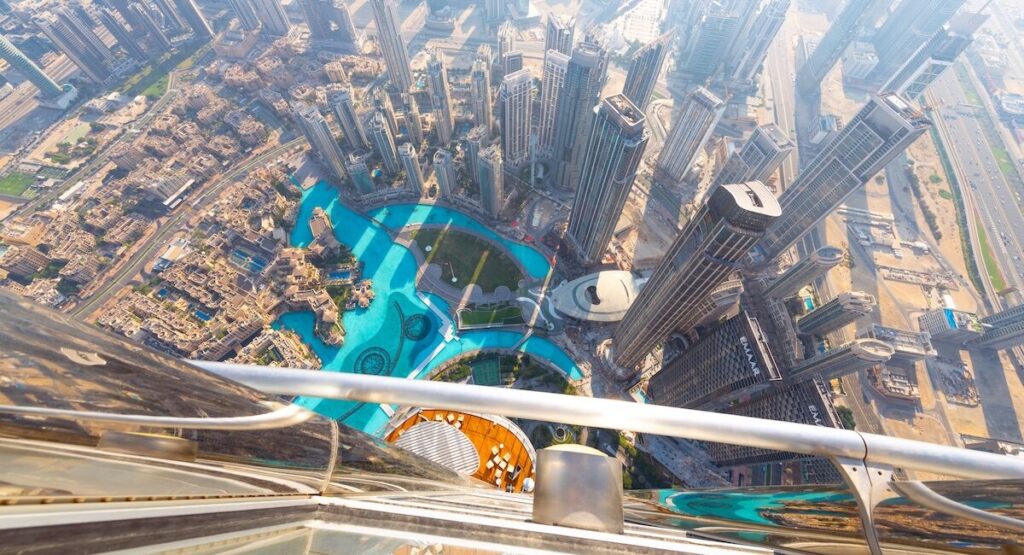
No visit to Dubai is complete without a trip to the Burj Khalifa’s observation decks. There are three main levels accessible to the public:
At the Top (Level 124 & 125): This is the most popular option, offering panoramic views of the city, desert, and ocean. Telescopes and a glass-walled balcony enhance the experience.
At the Top SKY (Level 148): Located at a jaw-dropping height of 555 meters, this deck offers VIP treatment, lounge seating, and guided tours.
The Lounge (Levels 152–154): As the highest lounge in the world, it serves luxury tea and snacks while offering breathtaking sunset views.
These levels not only provide stunning vistas but also tell the story of Dubai’s rise from desert outpost to global city.
The Light Show and Fountain Spectacle
Every evening, the Burj Khalifa transforms into a canvas of light and sound. Using LED displays, it showcases dazzling visual shows during national celebrations, New Year’s Eve, and even daily events.
Just outside the tower lies the Dubai Fountain, another record-breaking attraction. Set in the Burj Lake, the fountain dances to music ranging from classical Arabic to global pop hits. The synchronized light and water show is free for the public and offers a magical end to any evening.
Sustainability at Great Heights
Despite its scale, the Burj Khalifa makes significant efforts toward sustainability. It uses a condensation collection system that gathers thousands of liters of water daily from the tower’s cooling systems. This water is recycled for landscaping and irrigation.
Additionally, the tower’s exterior was designed to reduce solar heat, helping regulate internal temperatures and reduce energy usage.
These innovations show that even the tallest buildings can aim for environmental responsibility.
Burj Khalifa’s Impact on Dubai
The Burj Khalifa didn’t just change the skyline—it changed Dubai’s global identity. Since its completion, it has become a symbol of success, resilience, and visionary leadership. As a result, it draws tourists, business investors, and global attention, boosting the local economy.
Moreover, the surrounding Downtown Dubai area—featuring the Dubai Mall, Souk Al Bahar, and numerous high-end hotels—has flourished, turning into one of the most prestigious destinations in the world.
Tips for Visiting the Burj Khalifa
To make the most of your visit, consider the following tips:
Book your tickets in advance, especially for Level 148 and peak hours like sunset.
Arrive early to avoid long queues and enjoy the surroundings.
Check the weather for clear skies—you’ll get better views from the top.
Combine your visit with the Dubai Mall and the Dubai Fountain for a full experience.
Conclusion: More Than Just a Building
In conclusion, the Burj Khalifa is not just a building—it’s an experience, a legacy, and a powerful statement about what humanity can achieve. From its architectural brilliance and luxurious interiors to its cultural significance and breathtaking views, it offers something for everyone.
Whether you’re looking up in awe from its base or gazing down on the city from the clouds, the Burj Khalifa makes a lasting impression. It’s a modern-day wonder, proving that dreams, no matter how high, can be built.
So, the next time you find yourself in Dubai, make sure to look up—and let yourself be inspired.